Why Olive Trees Work So Well in Northern California Landscapes

November 15, 2026

Olive trees have a way of making a landscape feel established.


Their sculptural trunks, silvery foliage, and restrained growth habit can fit into Mediterranean, contemporary, rustic, and even more formal garden designs.


In Northern California, they can be especially appealing because the climate, long dry season, and architectural styles found throughout the region often pair naturally with the look of an olive tree.


At Jungle Bamboo and Palms in Cotati, olive trees are part of a broader collection of climate-adapted and distinctive plants selected for Northern California landscapes.


Olive Trees Bring Year-Round Structure

One of the biggest advantages of an olive tree is that it can provide visual structure throughout the year.


The canopy has a fine texture, while the trunk can become increasingly characterful over time.


That makes an olive useful as more than just a background tree.


It can serve as a focal point near a patio, frame an entry, anchor a courtyard, or add vertical interest to a larger planting bed.


Because the foliage is relatively subtle, olives can also work well alongside bolder plants without competing too heavily for attention.
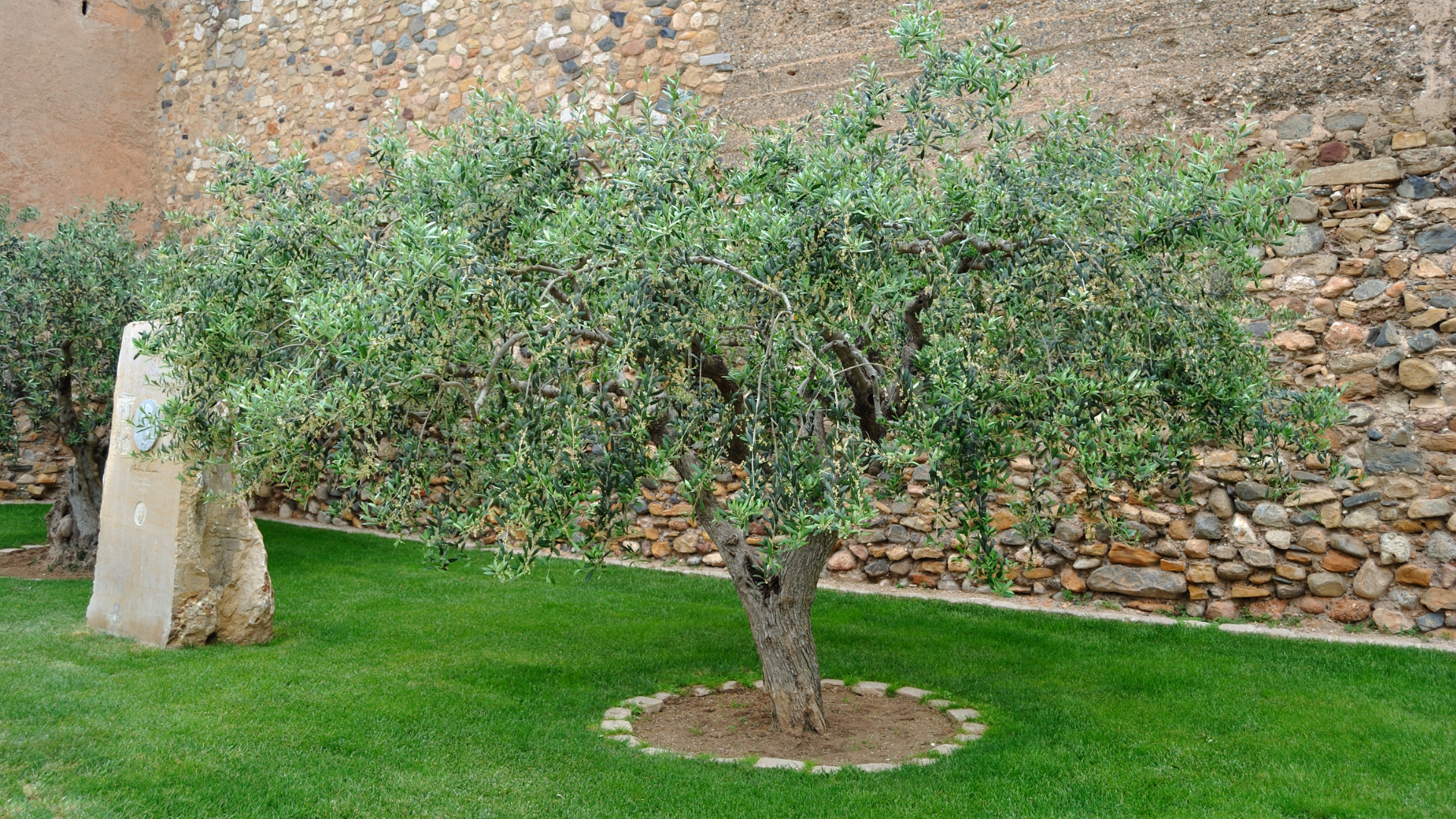
Small olive tree on a green lawn beside a stone wall and a standing stone marker.

They Fit the Mediterranean Character of the Region

Many Northern California landscapes already use materials and design cues that pair well with olives.


Stone, gravel, stucco, wood, terracotta, and drought-conscious plantings all complement the tree's natural appearance.


That makes it possible to create a cohesive Mediterranean-inspired landscape without making the design feel overly themed.


An olive can also bridge architectural styles.


It may look at home beside a traditional residence, but the clean shape and muted foliage can work just as well in a modern landscape.


Fruiting and Non-Fruiting Options Serve Different Needs

Not every olive tree has the same role.


Jungle Bamboo and Palms carries varieties that can suit different landscape goals, including Manzanillo, Wilsonii, and Majestic Beauty.


Manzanillo is a fruiting olive, while Wilsonii is lightly fruiting and Majestic Beauty is considered non-fruiting.


That distinction matters.


Some property owners may want the traditional appearance and fruit production of a classic olive.


Others may prefer a tree with less fruit drop near patios, walkways, driveways, or other high-use areas.


Choosing the right variety early can help prevent maintenance frustrations later.
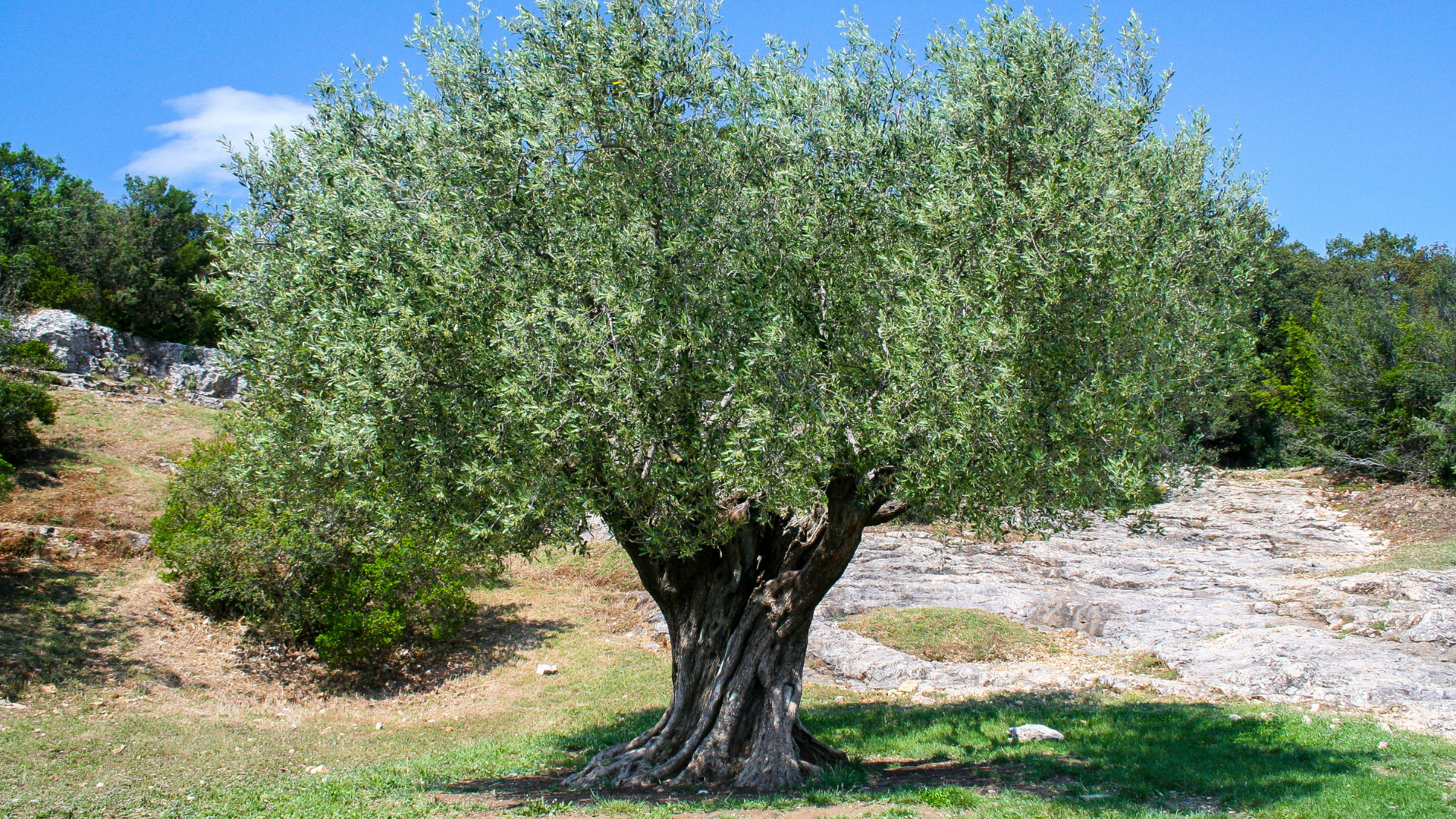
Olive tree in a sunny rural landscape with green foliage and rocky ground

Mature Size and Placement Still Matter

Even a well-adapted plant needs the right location.


Olive trees should be selected with mature size, sun exposure, soil conditions, drainage, and surrounding structures in mind.


A tree planted too close to a walkway, building, or other major feature may become harder to manage as it grows.


The goal is to give the tree enough room to develop naturally.


That is where local nursery guidance can be valuable.


The staff at Jungle Bamboo and Palms brings more than 65 years of combined landscape-industry experience and can help customers think beyond the size of the plant at purchase.


They Pair Well With Other Architectural Plants

Olive trees also combine well with many of the other plants available at Jungle Bamboo and Palms.


Bamboo can provide screening.


Palms can add height and a more tropical influence.


Tree ferns, podocarpus, magnolias, and unusual specimen plants can introduce additional texture and structure.


The olive's relatively calm foliage can help balance those stronger forms.


That makes it a useful anchor in a mixed landscape rather than a plant that has to stand alone.
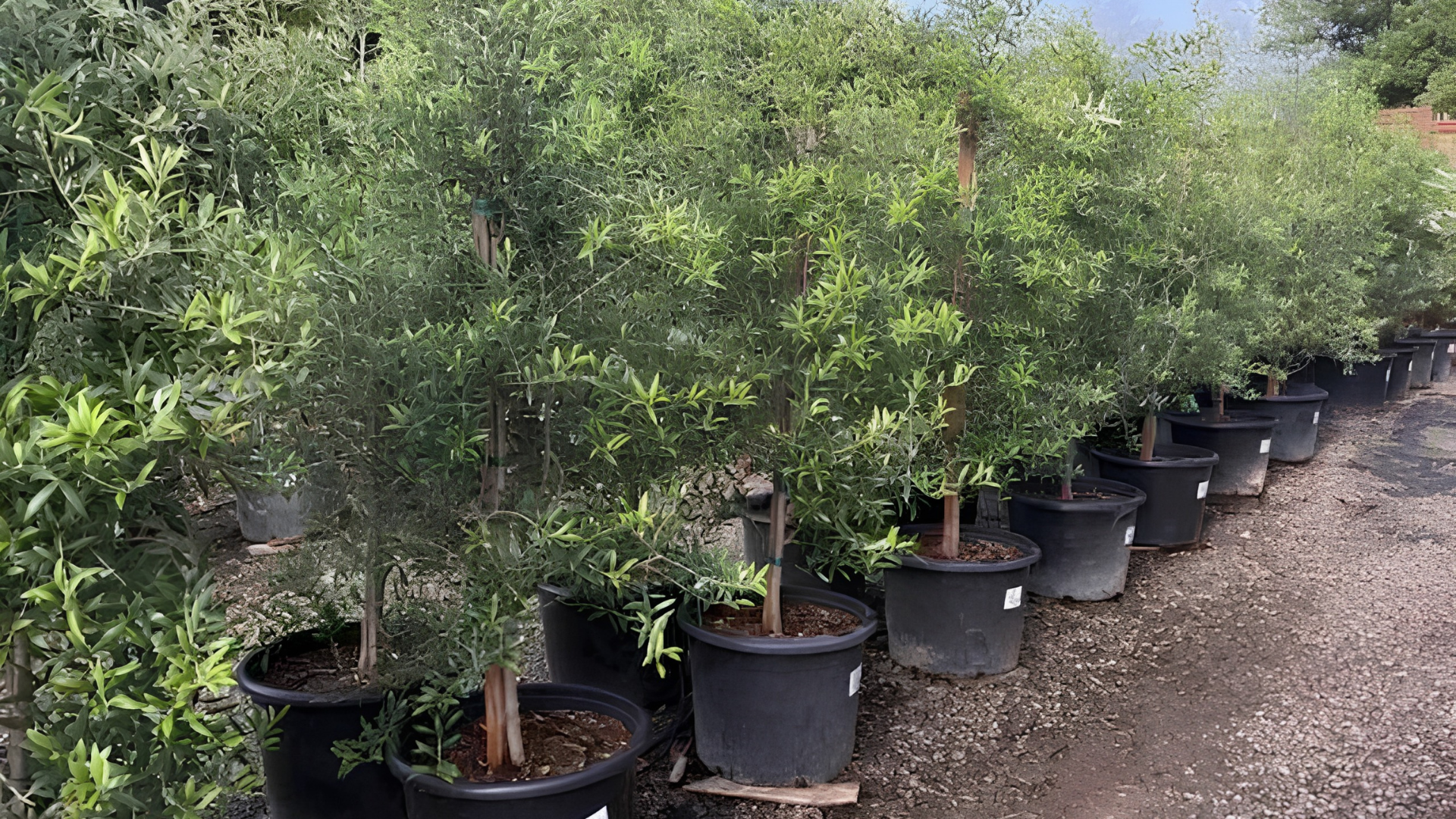
Rows of potted green shrubs at a nursery, lined up on a gravel path at Jungle Bamboo and Palms Nursery

A Strong Choice for Northern California Gardens

A successful landscape should fit both the property and the local conditions.


Olive trees can do that especially well in Northern California because they offer a combination of sculptural beauty, year-round structure, and broad design flexibility.


Jungle Bamboo and Palms, located on six acres at 503 W Railroad Avenue in Cotati, serves homeowners, designers, contractors, municipalities, and plant collectors throughout Northern California.


The nursery offers bamboo, palms, olive trees, tropical and interior plants, and unusual specimens, along with plant-selection consultations, care guidance, and curbside delivery.


If you are considering an olive tree, choosing the right variety and placement can make the difference between simply adding a tree and creating a lasting focal point in the landscape.
November 4, 2026
It is easy to assume that two properties in the same town should support the same plants. They share the same zip code, similar seasonal temperatures, and roughly the same rainfall. But landscapes are influenced by much more than the weather forecast. Sun exposure, wind, drainage, slope, reflected heat, soil conditions, and even nearby buildings can create very different growing environments just a few streets apart.  That is why plant selection works best when it starts with the actual site, not just the city name.
October 31, 2026
Exotic plants can completely change the character of a landscape. A palm with unusual form, a dramatic bamboo, a tree fern , or another distinctive specimen can make a garden feel more layered, architectural, and memorable. The challenge is choosing plants that look unusual without ignoring the realities of the local climate. That is why cold-hardy exotic plants are so valuable in Northern California. They can create a more distinctive landscape while still offering a better chance of handling seasonal temperature changes. Exotic Does Not Have to Mean Delicate Many people assume unusual or tropical-looking plants are automatically fragile. That is not always true. Some palms, bamboo varieties , broad-leaved plants, and other specimens can tolerate surprisingly cool conditions once established. The key is choosing the right species for the site. A plant that performs well in a protected courtyard may struggle on an exposed hillside. Another may tolerate winter cold but dislike saturated soil. That is why plant selection needs to consider both appearance and actual growing conditions.
October 23, 2026
Bamboo is often associated with lush, tropical landscapes.  That is only part of the story. Depending on the variety, placement, and surrounding materials, bamboo can also fit beautifully into clean, modern gardens with restrained planting palettes and strong architectural lines. Its versatility comes from its form. Tall canes create vertical structure. Narrow leaves add movement. Dense plantings can provide privacy, while more open arrangements can function almost like living sculpture. That makes bamboo useful in very different landscape styles.
October 16, 2026
Rare and unusual plants can transform a landscape, but only when they are matched to the conditions where they will actually grow. A palm that looks perfect in a photograph may struggle in a windy location. A bamboo variety may become too large for the space. A specimen plant that loves warmth may fail in a low spot where cold air settles overnight. That is why plant selection should begin with the property, not the plant tag. At Jungle Bamboo and Palms in Cotati, California , the goal is to help homeowners, designers, contractors, municipalities, and collectors choose distinctive plants that fit real Northern California growing conditions. Every Property Has Its Own Microclimate Northern California landscapes can vary dramatically even within the same neighborhood. One yard may receive intense afternoon sun while the property next door is shaded by mature trees. A south-facing wall can create a warm pocket, while a low area nearby may collect cold air. Wind also matters. A palm that performs well in a protected courtyard may behave very differently in an exposed location. That is why broad climate information is only the starting point. Plant selection should also consider sun exposure, drainage, wind, reflected heat, available space, and surrounding structures.
October 9, 2026
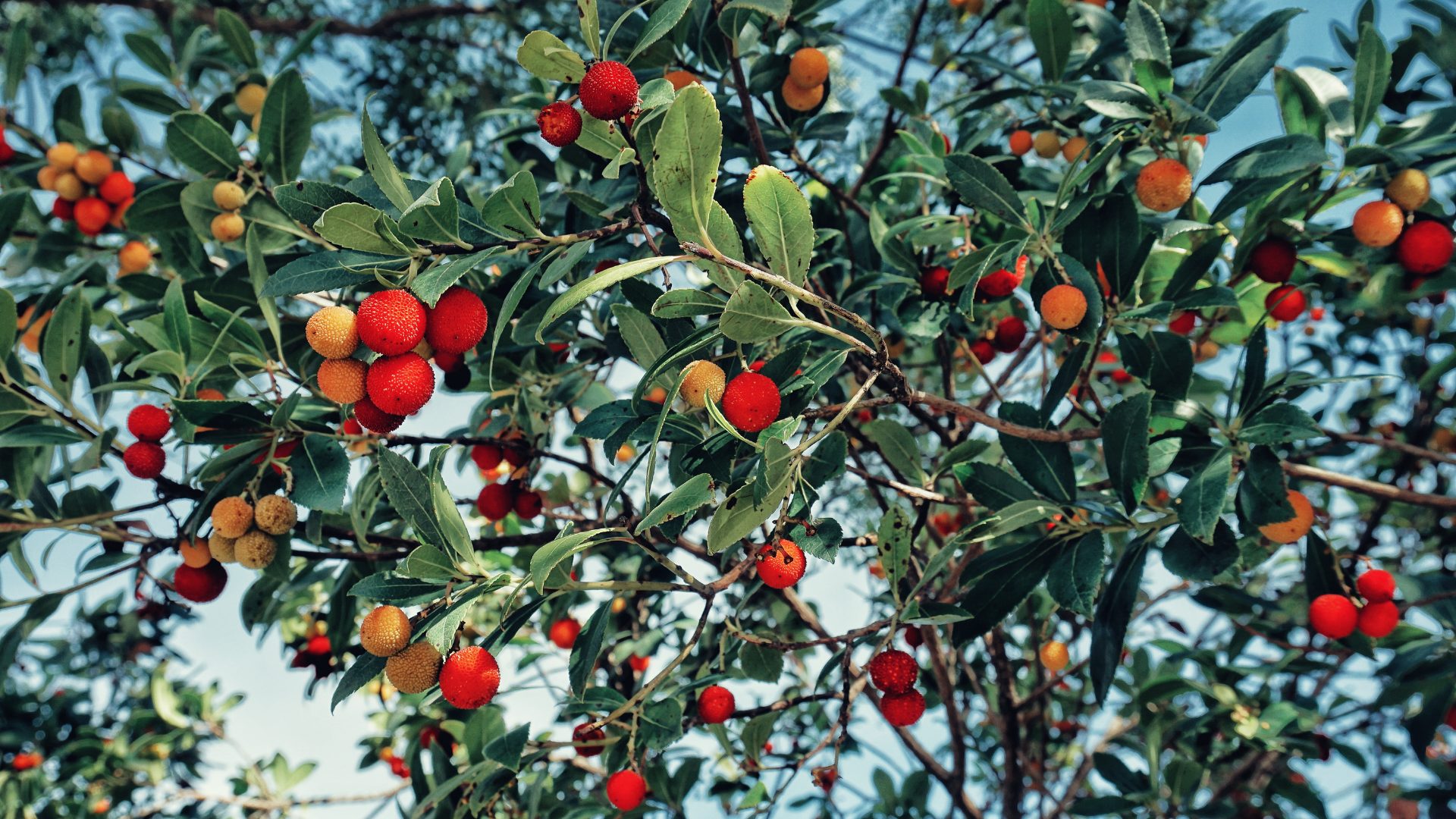
A good landscape plant does more than fill space. The best choices often serve several purposes at once. The strawberry tree is a strong example. With its evergreen foliage , branching form, attractive bark, flowers, and colorful fruit, it can work as a focal-point specimen in one setting and as part of a privacy screen in another. For Northern California properties, that flexibility makes it especially useful when homeowners want year-round structure without relying on a conventional hedge. Evergreen Structure Adds Year-Round Value One of the biggest advantages of a strawberry tree is its evergreen foliage. Unlike deciduous plants that lose their leaves in winter, strawberry trees continue to provide visual structure throughout the year. That makes them useful in areas where screening is important during every season. Their foliage also gives a landscape a softer, more natural appearance than many tightly clipped hedge plants. Instead of creating a solid wall of greenery, strawberry trees can provide layered coverage while still allowing the planting to feel open and dimensional.
October 2, 2026
Why Plant Silhouette Matters in Landscape Design When people choose plants, they often focus first on color, flowers, or mature height. Those details matter, but one of the most important design qualities is often more subtle: silhouette. A plant’s silhouette is the overall shape it creates in the landscape. Some plants are narrow and upright. Others are rounded, spreading, arching, or strongly vertical. That basic form influences how the landscape feels from a distance and how different plants relate to one another. For homeowners in Northern California , thinking about silhouette can make a planting design feel more balanced, intentional, and visually interesting. Shape Creates Structure A landscape needs more than a collection of attractive plants. It needs structure. Plant silhouette helps create that structure by giving the eye clear forms to follow.  A tall, narrow palm can add vertical emphasis. A broad olive tree can create a spreading canopy. Bamboo can form a strong upright screen. A tree fern can add a soft, umbrella-like shape. When these forms are chosen thoughtfully, the landscape gains rhythm and definition.