
Manzanillo, Wilsonii, and Majestic Beauty Olives: How They Differ
Olive trees bring a distinctive Mediterranean character to Northern California landscapes. Their silvery-green foliage, sculptural branching, and ability to serve as either a focal point or part of a larger planting design make them especially versatile.
At Jungle Bamboo and Palm Nursery in
Cotati, customers can explore several olive varieties, including Manzanillo, Wilsonii, and Majestic Beauty. While all three offer the classic look associated with olive trees, they differ significantly in fruit production, maintenance considerations, and how they are typically used in the landscape.
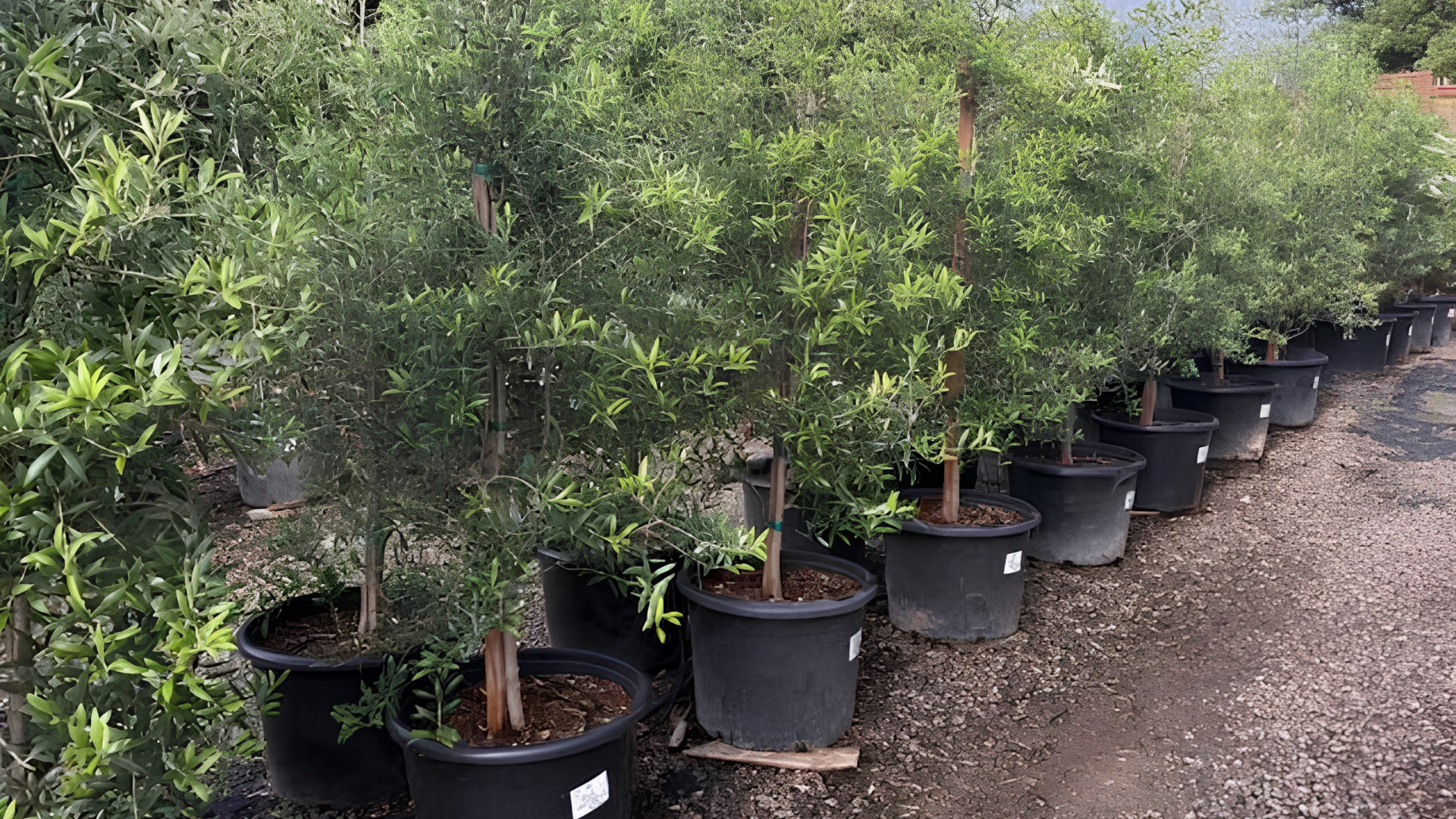
Manzanillo: A Traditional Fruiting Olive
Manzanillo is one of the best-known fruiting olive varieties. It produces the classic edible olives many people associate with traditional olive orchards and Mediterranean landscapes.
For homeowners who want both ornamental value and fruit production, Manzanillo can be an appealing choice. Its gray-green foliage gives the tree year-round visual interest, while the fruit adds another dimension to the planting.
The tradeoff is maintenance. Fruiting olive trees can drop olives beneath the canopy, so placement matters. A Manzanillo may be better suited to open landscape areas than directly beside patios, walkways, pools, or driveways where fallen fruit could become inconvenient.
For gardeners interested in the traditional olive-growing experience, however, Manzanillo offers both beauty and functionality.
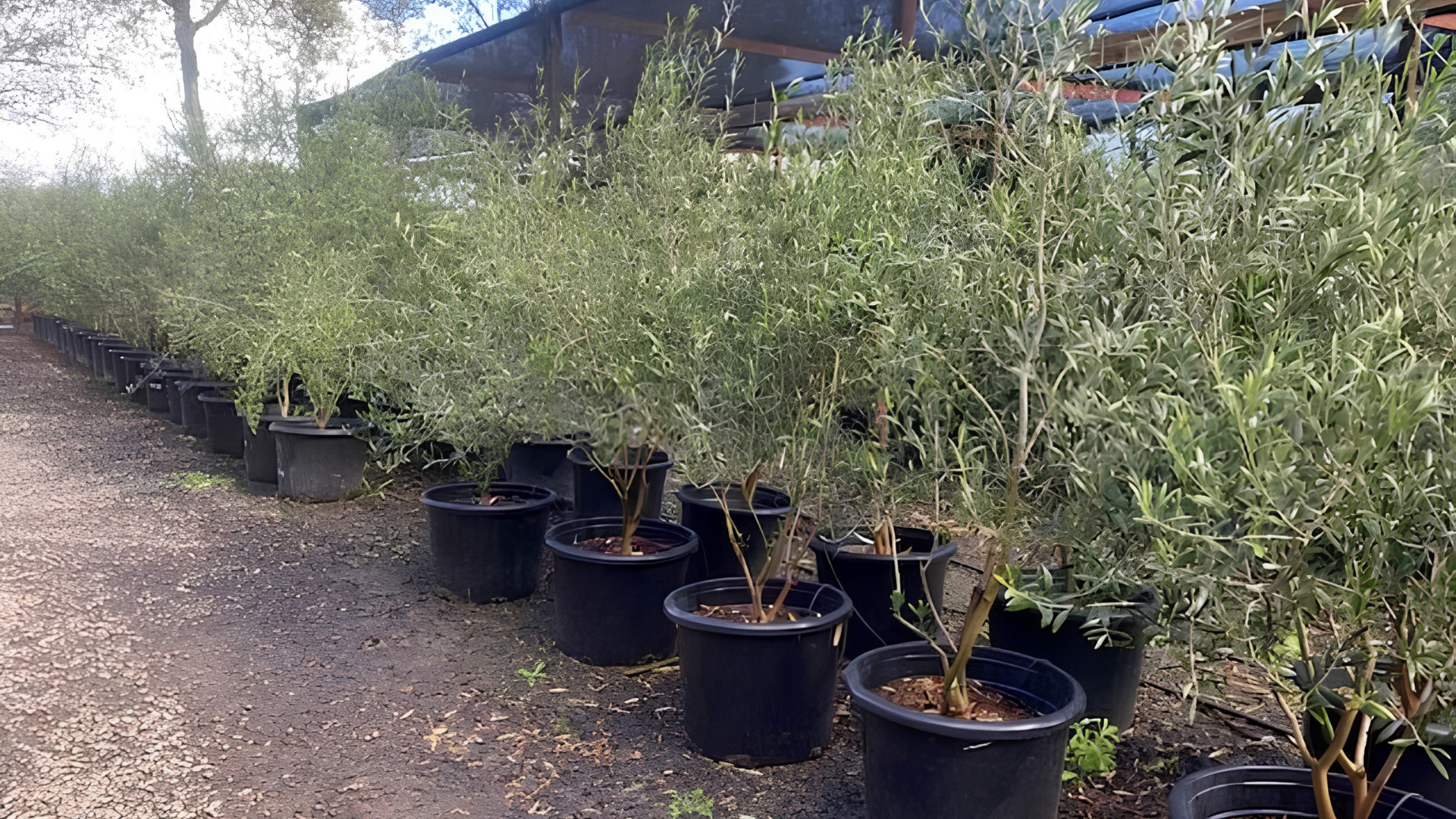
Wilsonii: Much Less Fruit With the Olive Look
Wilsonii is often chosen by people who love the appearance of an olive tree but would prefer to minimize fruit production.
This variety may produce some fruit, but generally far less than a traditional fruiting olive such as Manzanillo. That makes it useful in ornamental landscapes where reduced cleanup is an important consideration.
Wilsonii still provides the visual qualities people want from an olive tree: slender leaves, silvery foliage, an attractive branching structure, and a mature form that works well in Mediterranean, contemporary, and drought-conscious landscape designs.
Because it is lightly fruiting rather than completely fruitless, property owners should still consider where the tree is planted. For many landscapes, however, it offers an effective compromise between traditional olive character and easier maintenance.
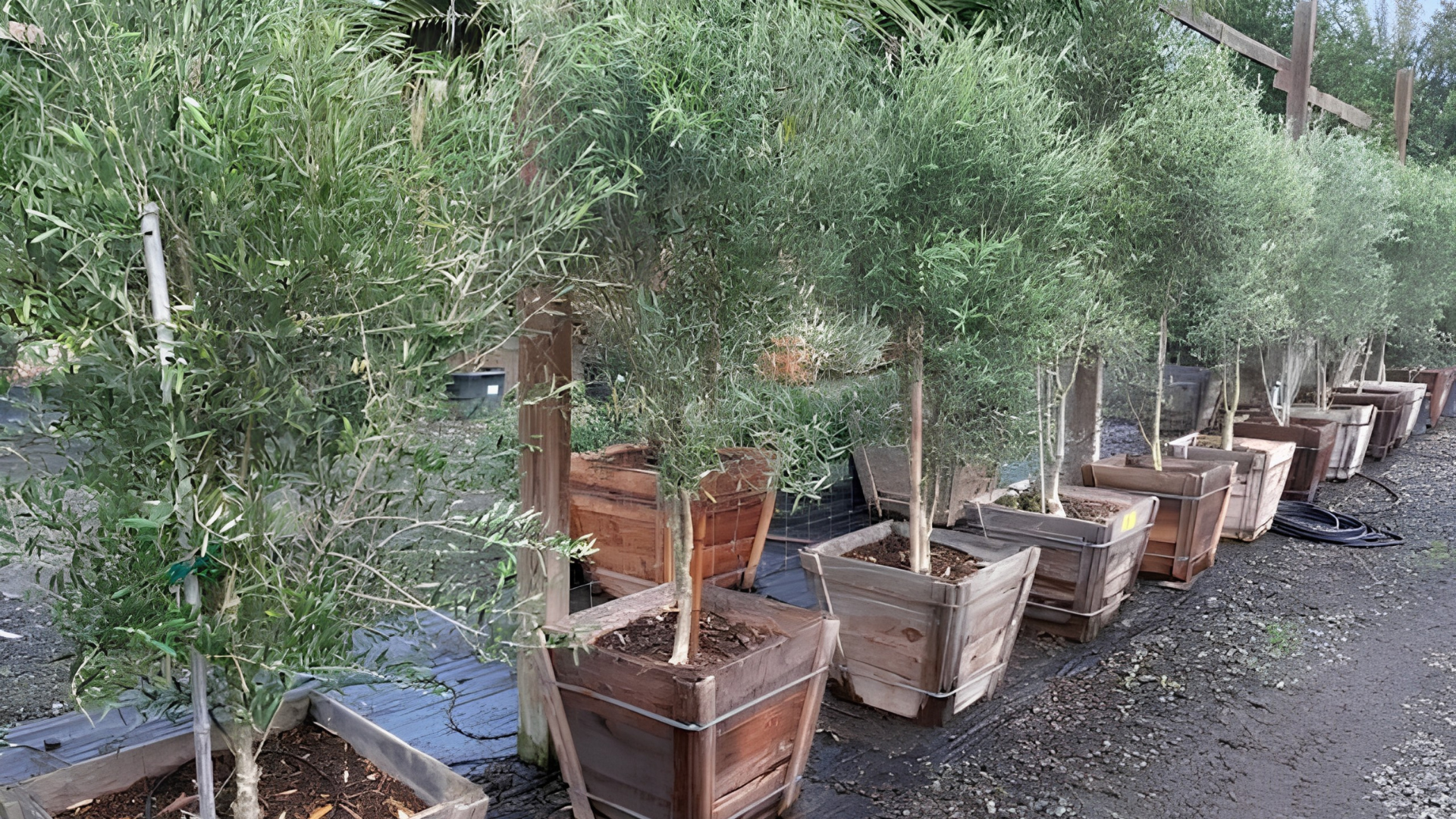
Majestic Beauty: A Non-Fruiting Landscape Olive
Majestic Beauty is a strong option when the goal is primarily ornamental.
This variety is valued as a non-fruiting olive, allowing homeowners and landscape professionals to enjoy the tree’s characteristic foliage and sculptural appearance without the same concerns about fallen olives.
That can make Majestic Beauty particularly attractive near outdoor living areas, commercial properties, entrances, walkways, and other locations where fruit drop would be undesirable.
Its form can provide architectural structure to a landscape while still maintaining a soft, natural appearance. The silvery foliage also creates beautiful contrast with deeper green plants, ornamental grasses, palms, bamboo, and other landscape materials.
For properties where appearance and lower fruit-related maintenance are priorities, Majestic Beauty may be the most practical of the three.
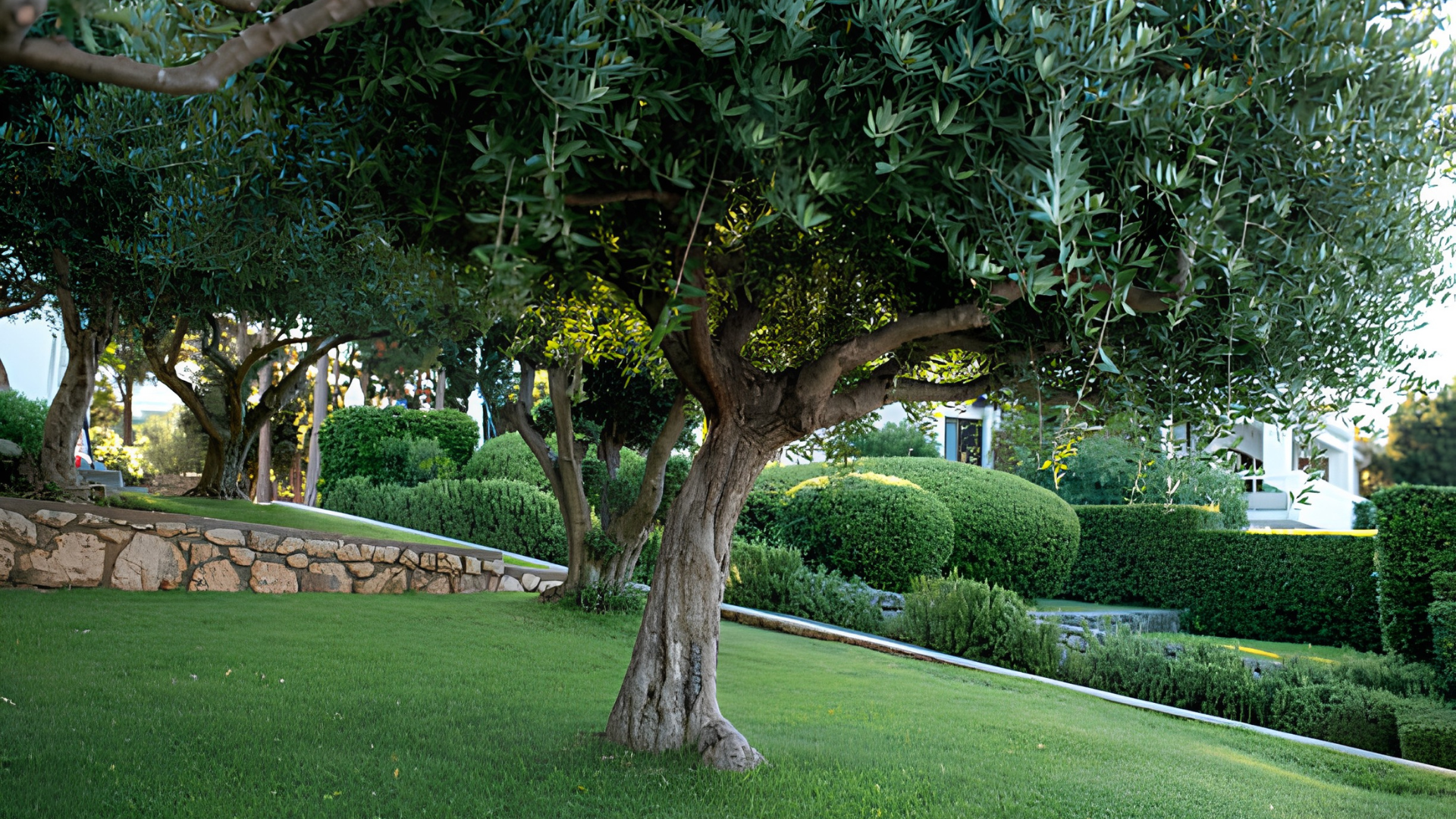
Which Olive Is Right for Your Landscape?
The best choice depends largely on what you want the tree to do.
If harvesting olives is part of the appeal, Manzanillo is the natural choice. If you want the traditional olive-tree appearance while reducing fruit production, Wilsonii may provide a useful middle ground. If your primary goal is ornamental beauty without fruit, Majestic Beauty is often the better fit.
Location is equally important. Consider nearby patios, vehicles, walkways, pools, and outdoor gathering areas before selecting a fruiting variety.
You should also think about the tree’s mature size and how its form will interact with surrounding plants and structures. Olive trees can become significant landscape features, so choosing the right location from the beginning can make a considerable difference in the finished design.
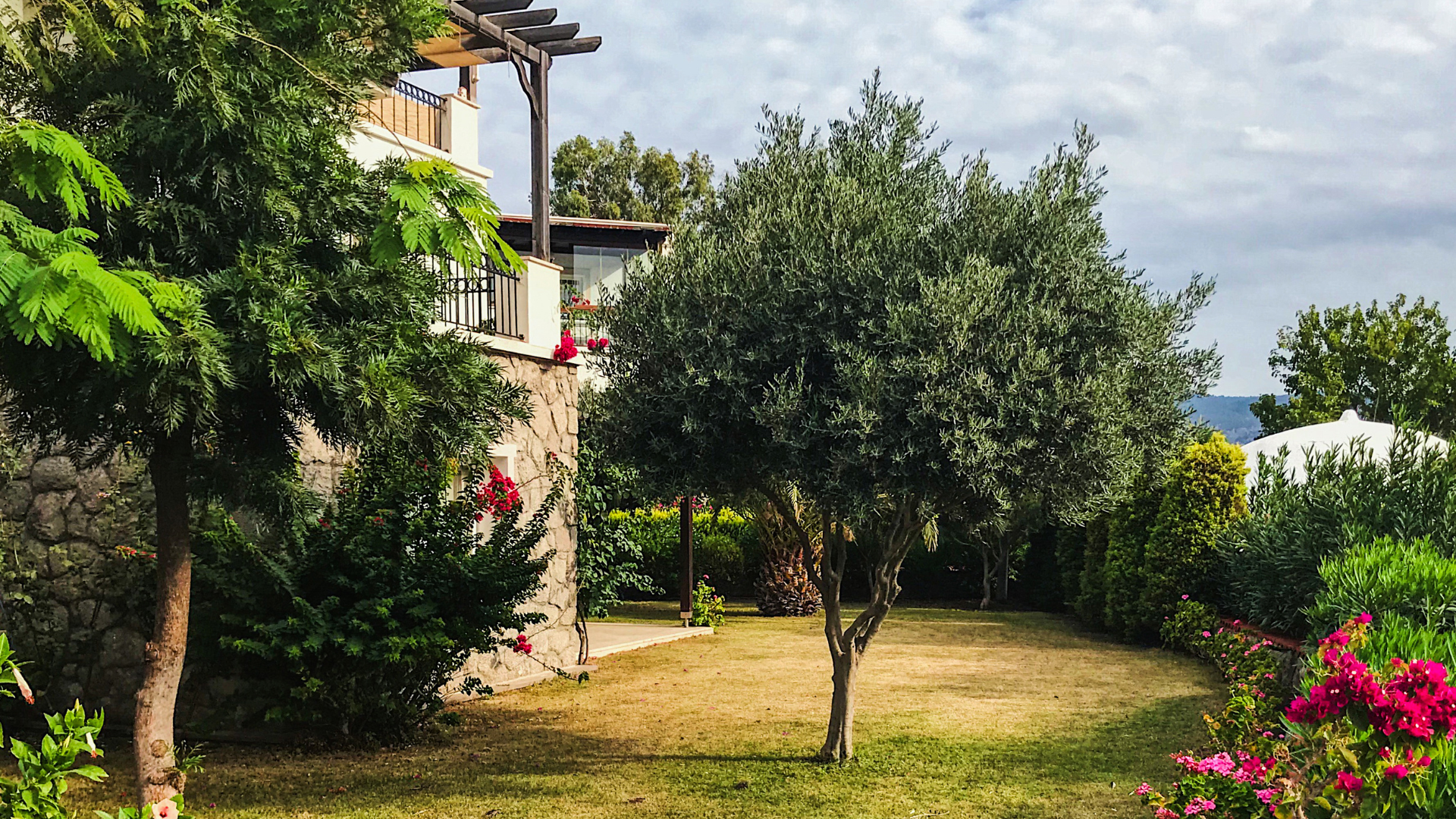
Designing With Olive Trees
Olives are particularly effective when used as structural elements in a landscape.
A single tree can act as a specimen near an entrance, courtyard, or outdoor seating area. Multiple trees can establish rhythm along a driveway or larger property. Their muted foliage also pairs well with plants that have stronger green tones, creating subtle contrast without overwhelming the design.
In Northern California, olive trees can be especially effective when combined with other plants chosen for the property’s particular sun exposure, drainage, wind conditions, and microclimate.
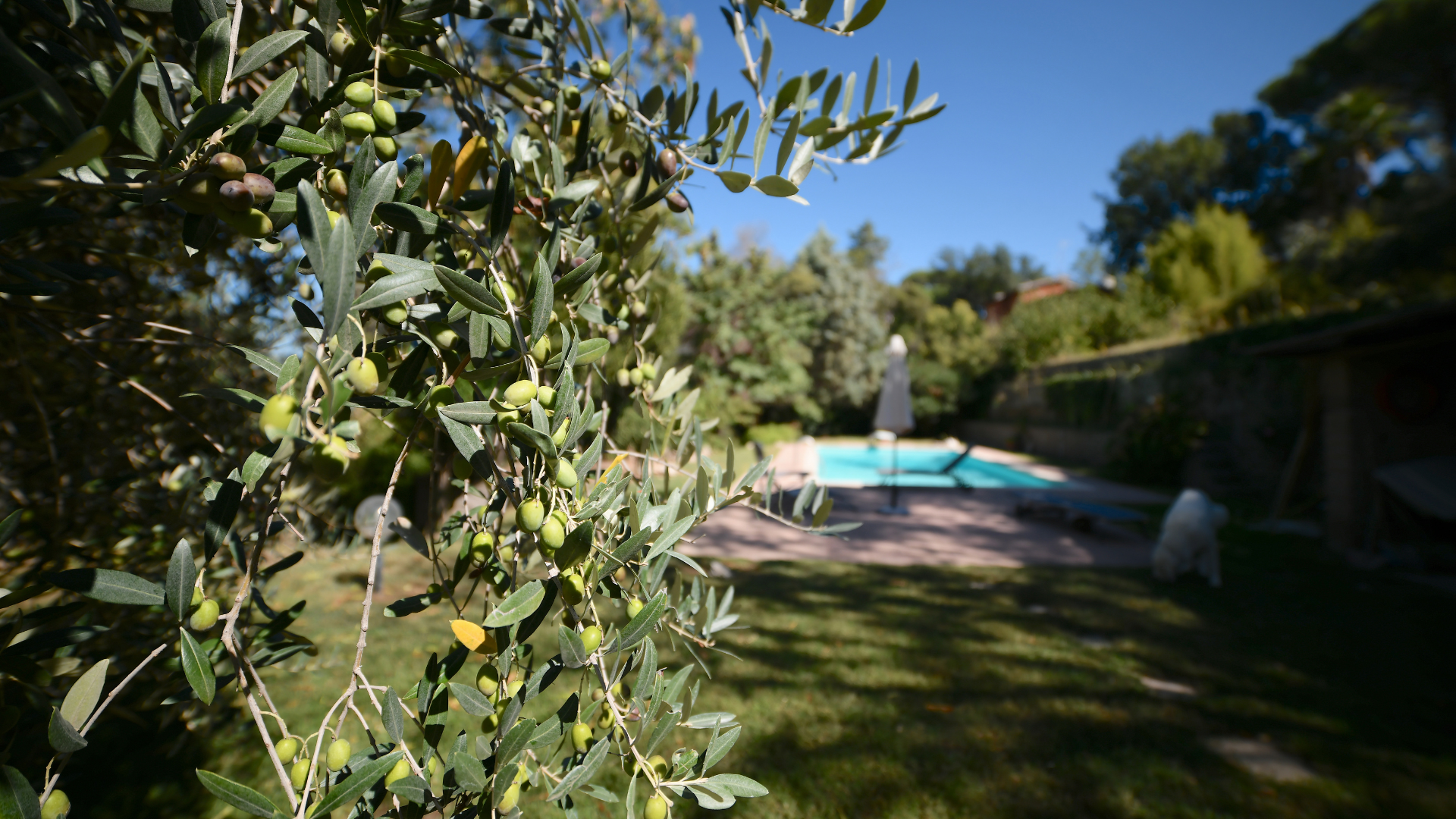
Find the Right Olive Tree for Your Property
Manzanillo, Wilsonii, and Majestic Beauty each provide the timeless appearance of an olive tree while serving different landscape needs. The biggest distinction is fruit production: Manzanillo is fruiting, Wilsonii is lightly fruiting, and Majestic Beauty is non-fruiting.
Jungle Bamboo and Palm Nursery is a six-acre specialty nursery in Cotati serving homeowners, landscapers, designers, and commercial customers throughout Northern California. Along with olive trees, the nursery offers bamboo, palms, tropical plants, and unusual specimen plants selected for distinctive landscapes. Visit Jungle Bamboo and Palm Nursery to compare available olive varieties and get guidance on choosing the right tree for your property.